

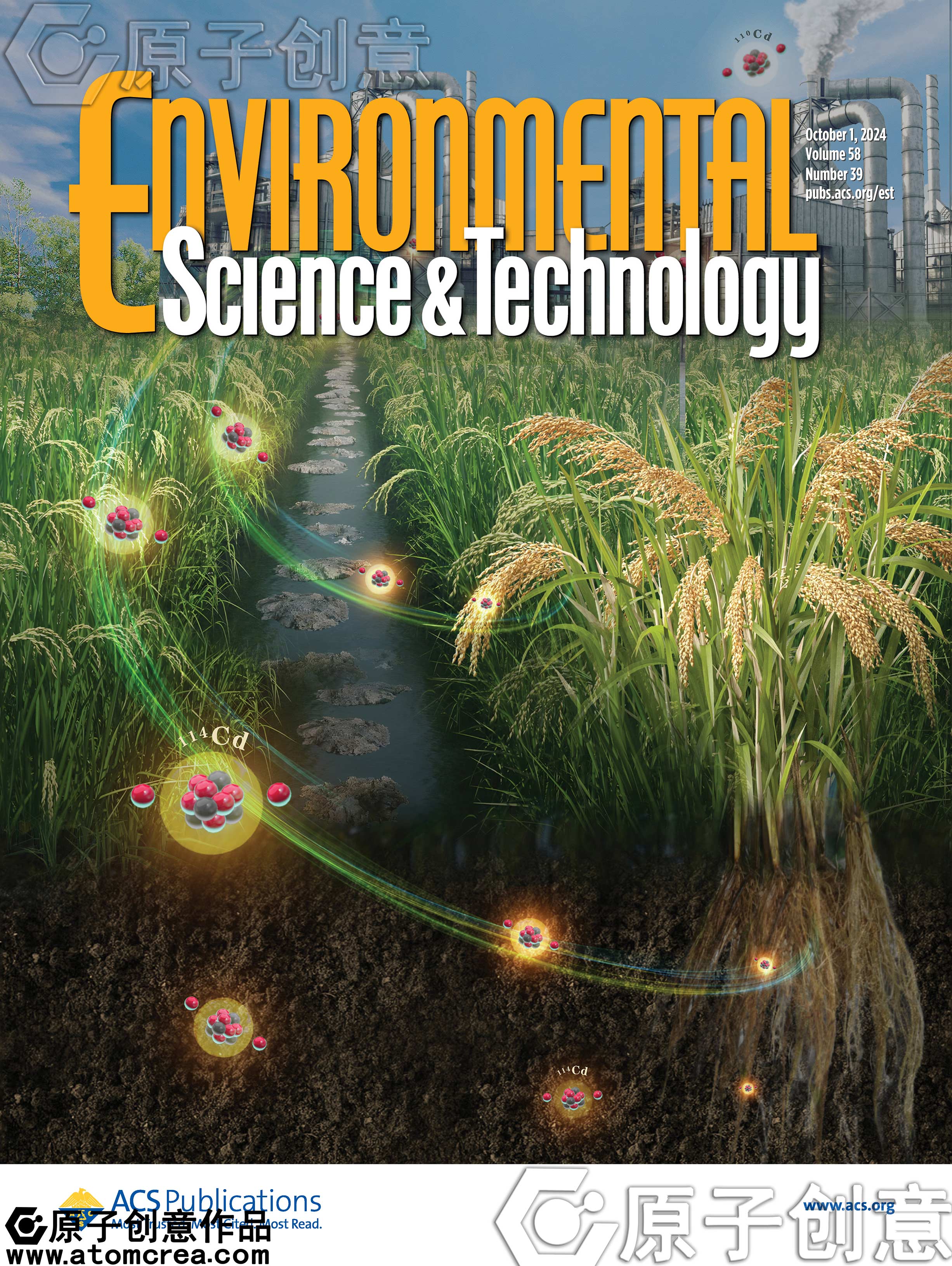
Isotope Evidence for Rice Accumulation of Newly Deposited and Soil Legacy Cadmium: A Three-Year Field Study
Biogeochemical processes of atmospherically deposited cadmium (Cd) in soils and accumulation in rice were investigated through a three-year fully factorial atmospheric exposure experiment using Cd stable isotopes and diffusive gradients in thin films (DGT). Our results showed that approximately 37–79% of Cd in rice grains was contributed by atmospheric deposition through root and foliar uptake during the rice growing season, while the deposited Cd accounted for a small proportion of the soil pools. The highly bioavailable metals in atmospheric deposition significantly increased the soil DGT-measured bioavailable fraction; yet, this fraction rapidly aged following a first-order exponential decay model, leading to similar percentages of the bioavailable fraction in soils exposed for 1–3 years. The enrichment of light Cd isotopes in the atmospheric deposition resulted in a significant shift toward lighter Cd isotopes in rice plants. Using a modified isotopic mass balance model, foliar and root uptake of deposited Cd accounted for 47–51% and 28–36% in leaves, 41–45% and 22–30% in stems, and 45–49% and 26–30% in grains, respectively. The implications of this study are that new atmospheric deposition disproportionately contributes to the uptake of Cd in rice, and managing emissions thus becomes very important versus remediation of impacted soils.







暂无评论内容